
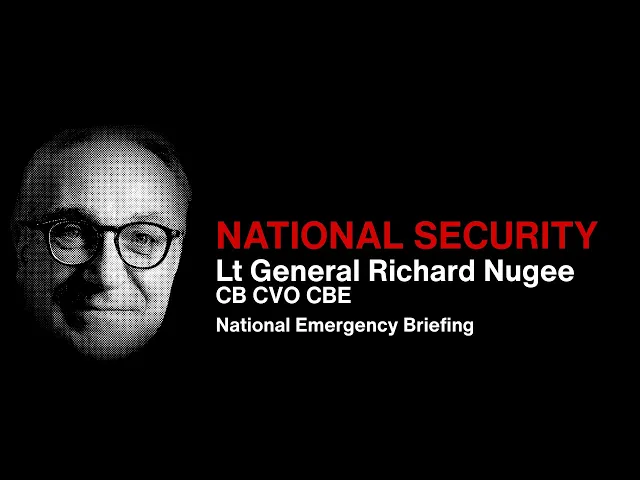
“We are facing the potential of an ungovernable state unless government takes this seriously.”
Lt General Richard Nugee CB CVO CBE
Key points from the briefing
Climate change is now a core national security threat. Defence institutions in the UK, NATO and beyond recognise climate as a threat multiplier - worsening existing risks and creating entirely new ones.
The threat picture is shifting faster than expected. Climate shocks are driving instability, resource competition, displacement and conflict — from food and water stress to new geopolitical flashpoints like the Arctic.
Climate fuels global instability that directly affects UK security. When livelihoods collapse, recruitment to non-state armed groups rises. When food and water are scarce, tensions escalate between states.
Instability abroad translates into instability at home. Food price shocks, supply chain disruption, flooding, fires, heatwaves and uninsurable homes all increase pressure on public trust and governance.
The military is already being pulled into domestic climate emergencies. RAF deployments to prevent dam collapse and respond to floods are a preview of the future if emissions cuts and adaptation fall behind.
The greatest risk is cascading crises. Multiple shocks hitting simultaneously — food, health, infrastructure, migration, energy and extreme weather — risk overwhelming government systems and eroding democratic stability.
Unchecked climate impacts risk the UK becoming an ungovernable state. They could cause not just a change of government, but the potential failure of democratic systems to cope under sustained stress.
Climate action strengthens national security. Energy independence through renewables, energy storage and a decentralised grid based on renewables makes the UK more resilient and less vulnerable to hostile actors. It provides a safer, more stable society, including a stronger democracy.
This is not a future problem or a trade-off. Addressing climate change is central to national security today, not something to postpone.

