View: "The IPCC has indicated extreme climate scenarios are no longer plausible, by retiring the RCP8.5 scenario"

Quick Reply

This is incorrect. The IPCC has not admitted that climate projections were "wrong" or that severe climate change is no longer plausible.


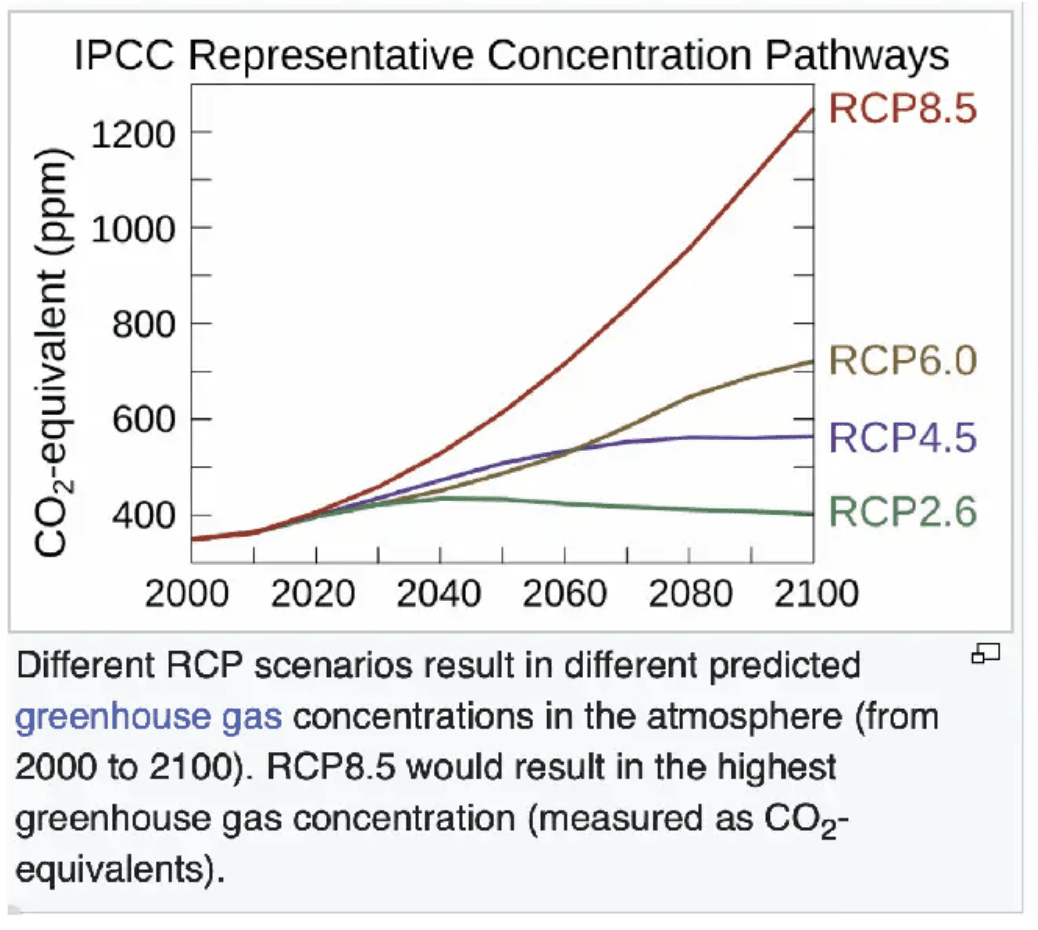
RCP8.5 was a hypothetical high-emissions scenario used to explore climate risks and test models, not a prediction of the future. It has largely been superseded because the exceptionally high coal use assumed in the scenario no longer reflects the most plausible future pathways.


This is good news. It suggests the world has moved away from one of the most extreme emissions trajectories.


But, current projections still point to around 2.5-3°C of warming this century, with severe threats including food shortages, health system breakdown and collapse of ecosystems and economies.


More on this from Carbon Brief here

More Detail

RCP8.5 was developed in the early 2010s as a high-end emissions scenario. It was designed to help scientists understand the consequences of very high greenhouse gas emissions and provide a benchmark against which climate policies could be assessed. It was never intended to be the IPCC's forecast of the future. 


Some commentators later described RCP8.5 as "business as usual", implying it was the most likely outcome. Several of the scientists involved in developing the scenarios have since clarified that this was incorrect. One of the lead scenario developers recently stated that RCP8.5 was always intended as a "low-probability, high-risk scenario" and "was never a likely outcome". 


The reason RCP8.5 is no longer used is not because climate science has been disproved. Rather, changes in technology, renewable energy costs, climate policies and emissions trends mean that the exceptionally high coal consumption assumed in RCP8.5 is no longer considered a plausible basis for future scenarios. 


Importantly, scientists are not replacing RCP8.5 with a safe future. The latest scenarios suggest the world is still heading towards around 2.5-3°C of warming, and that limiting warming to 1.5°C without significant overshoot is no longer considered plausible. The range of possible futures has narrowed, but it remains deeply concerning. 


In short, the good news is that one of the most extreme emissions pathways appears to have been avoided. The bad news is that current trajectories still imply dangerous levels of warming and climate disruption. 

There is clear evidence that urgent action will strengthen our economy, resilience, and quality of life.

The National Emergency Briefing exists to help create a societal tipping point towards the action now required. You can help make it happen.

National Emergency Briefing

National Emergency Briefing

© 2026 All Rights Reserved

Contact us

Please check in FAQs first to help us. If it's about a screening, please tell us the postcode and date.

There is clear evidence that urgent action will strengthen our economy, resilience, and quality of life.

The National Emergency Briefing exists to help create a societal tipping point towards the action now required. You can help make it happen.

National Emergency Briefing

National Emergency Briefing © 2026 All Rights Reserved

Contact us

Please check in FAQs first to help us. If it's about a screening, please tell us the postcode and date.

There is clear evidence that urgent action will strengthen our economy, resilience, and quality of life.

The National Emergency Briefing exists to help create a societal tipping point towards the action now required. You can help make it happen.

National Emergency Briefing

National Emergency Briefing

© 2026 All Rights Reserved

Contact us

Please check in FAQs first to help us. If it's about a screening, please tell us the postcode and date.