Claim: The average yearly net zero cost of £4bn sounds implausibly low
Quick Reply
Our film mentions the Climate Change Committee's official projection that net zero will cost around £4 billion a year on average to 2050 - net of savings.
That is surprisingly low for several reasons:
1️⃣ Enormous savings are projected to offset most of the investment leaving a relatively small net amount.
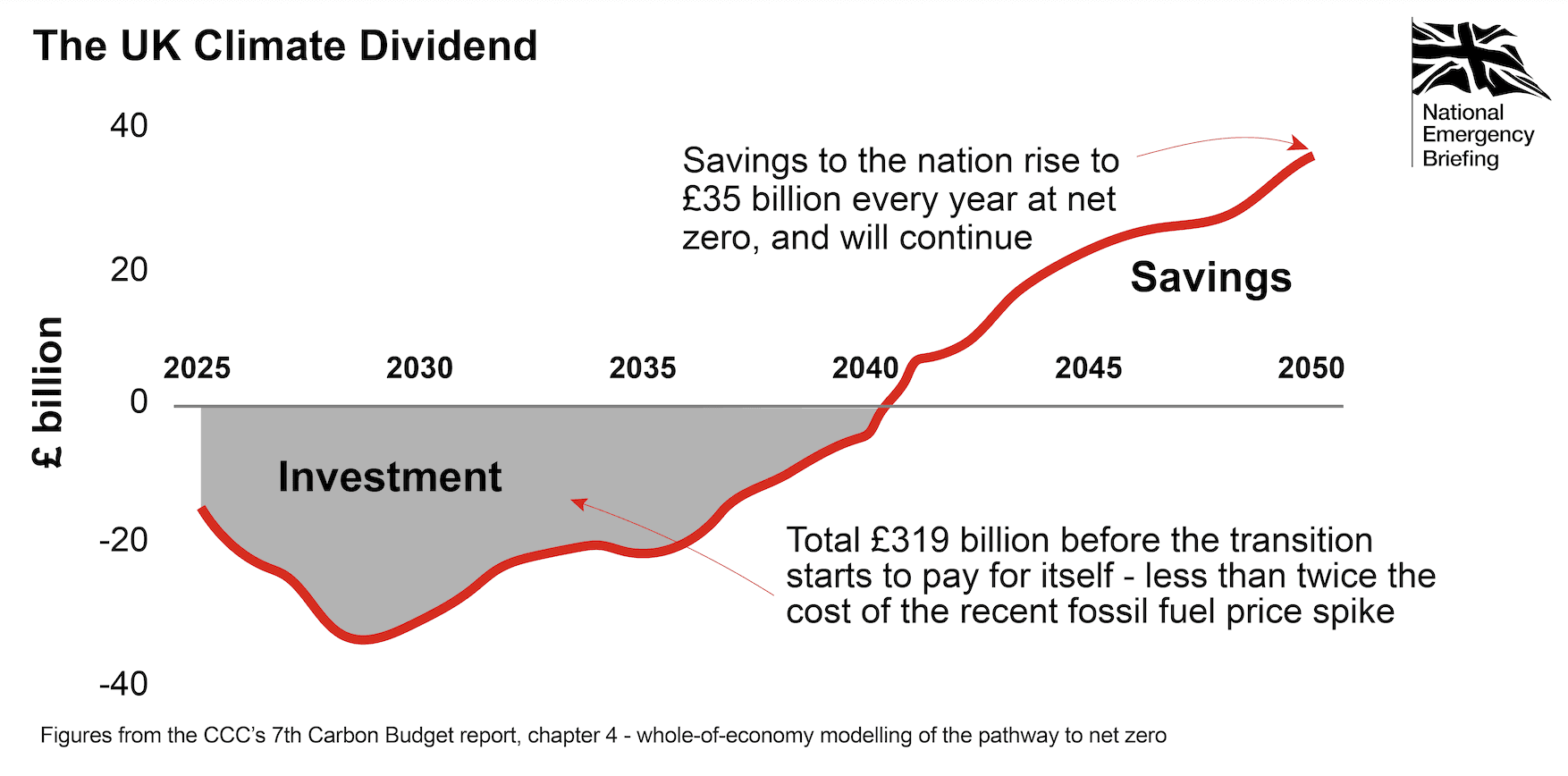
2️⃣ £4 billion is an average over 25 years. An initial outlay of £319 billion is required before the transition starts paying back - but that is less than twice the extra cost caused by the recent fossil fuel price surge. It also helps avoid a much greater cost and will leave the UK better prepared for the impacts to come.
3️⃣ The projected cost of the transition has fallen 73% since 2020.
More Detail
In the People’s Emergency Briefing, economist Angela Francis cites the Climate Change Committee’s official estimate that reaching net zero is projected to cost an average of around £4 billion a year.
Feedback from screenings is that some people find this hard to believe. To understand why the average is so low, we need to look at the substantial investment and large savings behind it. It's also worth noting that the projected cost of the transition has fallen 73% since 2020.
In their 7th Carbon Budget report, the CCC projects average additional investment of £26 billion a year from 2025 to 2050, offset by £22 billion a year in operating savings - a difference of £4 billion. Cleaner, more efficient technologies reduce the amount we spend running our homes, transport and economy.
We should add that 2050 is far too slow, with warming and impacts far ahead of what was expected when the UK made its 2050 plan - but the good news is that moving faster is likely to save even more money.

This investment needed is front-loaded, while savings build up later - and the cumulative outlay needed before annual savings overtake spending is £319 billion. That is a substantial sum, but it needs context:
1️⃣ The investment is projected to deliver ongoing net savings rising to about £35 billion a year by the time the UK reaches net zero, and which will continue beyond then.
2️⃣ Inaction carries enormous economic risks. The Institute and Faculty of Actuaries warns of an enormous 50% contraction in global GDP from 2070 unless we change course.
3️⃣ The CCC’s projected cost is spread across the whole economy. It includes businesses and households, rather than being solely a government spending bill.
4️⃣ The government spent more during the pandemic. The cost of Covid to the government was £385 billion (excluding private sector costs) - and unlike investing to transition from fossil fuels, that spending was purely about avoiding something bad rather than building something better.
5️⃣ The extra cost to the UK caused by high oil and gas prices following Russia's oil and gas prices following Russia's invasion of Ukraine is now estimated at £183 billion. Upgrading to renewables would free us of these repeating fossil fuel price crises.
With this context, it's clear that the £319bn will be possibly the best investment our country has ever made.
